How Blade Runner 2049 Made Its Hologram Feel Real 🎬✨

지금 보고 있는 영상
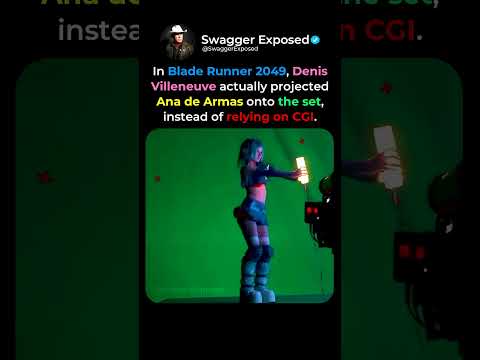
How Blade Runner 2049 Made Its Hologram Feel Real 🎬✨
조회수 30,553
영상 설명 · 눌러서 펼치기
When director Denis Villeneuve set out to recreate the holographic companion Joi in Blade Runner 2049, he made a deliberate choice that separated his production from the increasingly CGI-dependent landscape of modern cinema. Rather than compositing Ana de Armas into scenes during post-production, the crew physically projected her pre-recorded footage directly onto the set in real time, allowing her co-star Ryan Gosling to react to an actual light source rather than an imaginary presence. This technique lent the performance an organic, luminous quality that digital insertion rarely achieves, as the projected image interacted authentically with the environment, casting genuine light and producing natural reflections across surfaces. The decision demanded extraordinarily precise coordination between the projection team, the cinematography department, and the actors, but it paid dividends in the final cut's atmospheric coherence. Villeneuve's insistence on practical methodology over digital convenience reinforced a broader artistic philosophy that honored the tactile, immersive world-building of Ridley Scott's 1982 original, and the result was a visual effect that felt paradoxically more human precisely because it had been achieved through physical means.
This video is intended solely for educational and historical analysis. It does not support, promote, or glorify war or any form of hatred. Its purpose is to present verified historical facts and encourage critical understanding of past events.
This video is intended solely for educational and historical analysis. It does not support, promote, or glorify war or any form of hatred. Its purpose is to present verified historical facts and encourage critical understanding of past events.
Swagger Exposed Shorts 다른 영상

That Time When Michael Bay Put Shia Labeouf on a Crushing Car 🎬💥
조회수 7,588

How Elijah Wood's Career Started in Back to the Future 2 🎬⚡
조회수 9,222

The Funniest Guardians of the Galaxy Blooper 🎬😂
조회수 22,792

When James Gandolfini Caught Nancy O'Dell Off Guard 😳🌹
조회수 60,935

When Robin Williams Impersonated Al Pacino to His Face 🎭😂
조회수 56,494

When James Cagney Proved Everyone Wrong in One Take 🕺🎬
조회수 78,625

The Xbox Ad They Could Never Make Today 🎮👾
조회수 4,972

That Time When Quentin Tarantino Hid Secrets for His Video Editor 🎬🥺
조회수 72,494