Every horse owner's worst nightmare 💔
지금 보고 있는 영상
Every horse owner's worst nightmare 💔
조회수 8,167
영상 설명 · 눌러서 펼치기
Original video credit:
@unknown
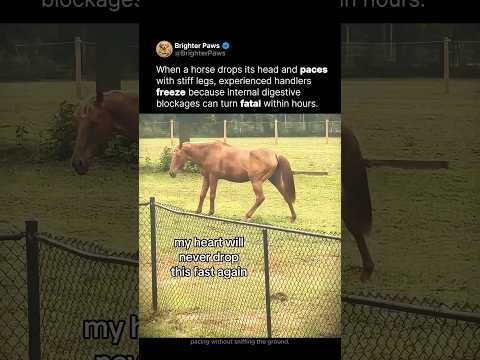
Recognizing early signs of equine colic can save a horse’s life. When a horse drops its head, paces restlessly with stiff legs, and refuses to graze, it often indicates acute abdominal pain. Because equines cannot vomit and have a highly sensitive digestive tract, issues like impactions or intestinal twists can escalate into life-threatening emergencies within hours.
Understanding these subtle behavioral warnings allows owners and handlers to act before complications worsen. If you observe continuous pacing, lethargy, or flank-watching, contact an equine veterinarian immediately. Prompt medical intervention is the single most critical factor for survival.
Copyright Disclaimer:
This video is presented for educational, commentary, and documentary purposes to provide context and insight into animal behavior, animal care, safety, and human-animal interactions. All third-party footage remains the property of its respective original creator(s). Such material may be used for commentary, explanation, education, or documentary discussion. Fair use may apply under Section 107 of the U.S. Copyright Act for purposes including criticism, comment, news reporting, teaching, scholarship, and research.
@unknown
Recognizing early signs of equine colic can save a horse’s life. When a horse drops its head, paces restlessly with stiff legs, and refuses to graze, it often indicates acute abdominal pain. Because equines cannot vomit and have a highly sensitive digestive tract, issues like impactions or intestinal twists can escalate into life-threatening emergencies within hours.
Understanding these subtle behavioral warnings allows owners and handlers to act before complications worsen. If you observe continuous pacing, lethargy, or flank-watching, contact an equine veterinarian immediately. Prompt medical intervention is the single most critical factor for survival.
Copyright Disclaimer:
This video is presented for educational, commentary, and documentary purposes to provide context and insight into animal behavior, animal care, safety, and human-animal interactions. All third-party footage remains the property of its respective original creator(s). Such material may be used for commentary, explanation, education, or documentary discussion. Fair use may apply under Section 107 of the U.S. Copyright Act for purposes including criticism, comment, news reporting, teaching, scholarship, and research.
Brighter Paws 다른 영상
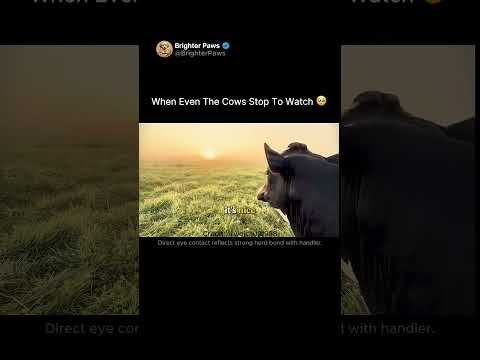
When Even The Cows Stop To Watch 🥺
조회수 1,953

The most satisfying grass crunch ever 🌿
조회수 5,269

Spooked horse reaction ended in direct hit 🤕
조회수 18,254

The snooze struggle is universal #hrose
조회수 5,031
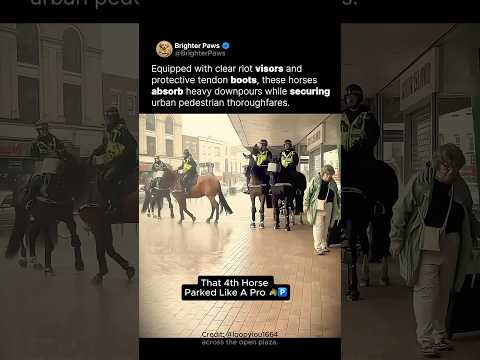
Horses are Better At Parking Than Most Drivers 🅿️😂
조회수 111,653

How a horse escapes the arena
조회수 29,509

When your horse runs out of battery
조회수 16,411

The most polite horse kick🐴
조회수 59,206