What is a digital footprint? How to reduce doxxing risks

지금 보고 있는 영상
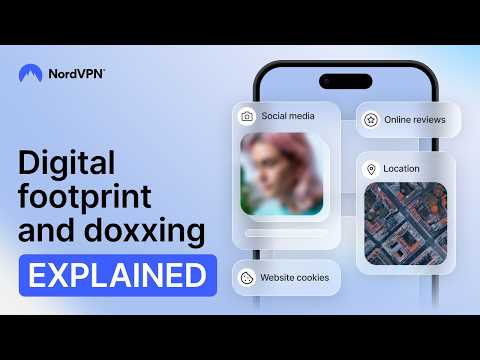
What is a digital footprint? How to reduce doxxing risks
조회수 422
영상 설명 · 눌러서 펼치기
Digital footprint explained 🤓
Get NordVPN Ultra plan that includes personal data removal tool Incogni: https://content.nordvpn.com/Digital-footprint-doxxing
***
Digital shadow, digital trail, data residue – these are all names for the same thing: your digital footprint. Why should you care? Watch this video and learn about the dangers of leaving your data behind and how to reduce your digital footprint with NordVPN and Incogni.
***
🔔 Subscribe to get the latest content: / @nordvpn
► RECOMMENDED VIDEOS ►
How to spot and avoid Black Friday scams: https://youtu.be/XgkdYxNDTK0
Hacking vs phishing: What’s the real difference?: https://youtu.be/9eKN7CQGh_s
Free VPN vs. paid VPN: Which one should you choose?: https://youtu.be/BWLcKAyQk5M
***
Contents:
00:00 Intro
00:17 What is digital footprint?
00:39 What is active digital footprint?
00:55 What is passive digital footprint?
01:20 The dangers of doxxing
02:00 How to reduce your footprint online?
02:40 Data removal tool Incogni
***
Digital shadow, digital trail, data residue – these are all names for the same thing: your digital footprint. But what exactly is a digital footprint, and why should you even care about it?
Every click, tap, or swipe contributes valuable information about you: your location, shopping habits, even personal desires. These bits of information are never really deleted. They are being analyzed so companies can create a detailed picture of your habits. Now all these random ads in your feed start to make sense.
There are two types of digital footprints. Let’s start with “Active digital footprints.” These consist of the things you choose to share online: Social media posts, reviews, comments, uploaded photos, and even emails. The second type is called a “Passive digital footprint,” which is made of what data sites collect about you, such as your browsing activity, cookies, shopping history, location, IP address, and device or app telemetry. That's how advertisers make billions of dollars – by employing that data.
Leaving pieces of your personal data on your favorite websites, old marketplace listings, geotags, and public records like WHOIS can lead to doxxing. For those who are not familiar, doxxing is the non-consensual public sharing of a person’s private details, like their address or phone number — collected online. The danger is far worse than just targeted ads. Doxxing can result in online harassment, scams, and online account takeovers.
Your personal data constantly piles up across the web. Data brokers can secretly gather everything from your name and phone number to past addresses. Meanwhile, social media defaults often make your posts public, and every app, smart device, and search engine continuously logs your location and activity.
The good news is that you can reduce your footprint online. Here are a few ways:
Audit and delete old accounts. (Change usernames if you use the same ones on different platforms.)
Review social media post visibility and set profiles to friends-only.
Limit your app permissions. (Disable locations, cameras, and microphones when you don’t use them.)
Use long, unique, and strong passwords as well as MFA. Don’t neglect password managers.
Switch to private search and clear third-party cookies. (Use VPNs to mask your IP and reduce tracking.)
And that’s not all. If you really want to reduce your digital footprint, you should remove yourself from data broker websites. Unfortunately, it’s a time-consuming process if you do it manually. But you can speed up the process by using platforms like Incogni. Incogni sends automated data deletion requests to data brokers on your behalf. It’s easier than it sounds.
Getting started with Incogni is a fast and intuitive process. You just sign up and log in. Then you provide Incogni with requested information and sign an authorisation form that allows Incogni to send opt-out requests. And from there, you don’t have to do anything: Incogni is fully automated. You can check the status of your completed and pending requests on an interactive dashboard. At the bottom of the dashboard, you can see the activity log, which shows the ongoing daily activity of Incogni. But that’s not all, Incogni sends periodic re-requests that keep those profiles down. So you can reduce the doxxing possibility and targeted harassment risk.
Time to take your online security to the next level, understand your digital footprint, and shrink what’s publicly available. Keep brokers at bay from re-publishing your data. Just get Incogni today. If you have any other great tips on how to reduce your digital footprint, please let us know in the comments below.
***
📌OUR SOCIAL MEDIA 📱
🔵FACEBOOK: https://www.facebook.com/NordVPN/
🔵INSTAGRAM: https://www.instagram.com/nordvpn/
🔵TIKTOK: https://www.tiktok.com/@nordvpn
🔵TWITTER: https://twitter.com/NordVPN
Get NordVPN Ultra plan that includes personal data removal tool Incogni: https://content.nordvpn.com/Digital-footprint-doxxing
***
Digital shadow, digital trail, data residue – these are all names for the same thing: your digital footprint. Why should you care? Watch this video and learn about the dangers of leaving your data behind and how to reduce your digital footprint with NordVPN and Incogni.
***
🔔 Subscribe to get the latest content: / @nordvpn
► RECOMMENDED VIDEOS ►
How to spot and avoid Black Friday scams: https://youtu.be/XgkdYxNDTK0
Hacking vs phishing: What’s the real difference?: https://youtu.be/9eKN7CQGh_s
Free VPN vs. paid VPN: Which one should you choose?: https://youtu.be/BWLcKAyQk5M
***
Contents:
00:00 Intro
00:17 What is digital footprint?
00:39 What is active digital footprint?
00:55 What is passive digital footprint?
01:20 The dangers of doxxing
02:00 How to reduce your footprint online?
02:40 Data removal tool Incogni
***
Digital shadow, digital trail, data residue – these are all names for the same thing: your digital footprint. But what exactly is a digital footprint, and why should you even care about it?
Every click, tap, or swipe contributes valuable information about you: your location, shopping habits, even personal desires. These bits of information are never really deleted. They are being analyzed so companies can create a detailed picture of your habits. Now all these random ads in your feed start to make sense.
There are two types of digital footprints. Let’s start with “Active digital footprints.” These consist of the things you choose to share online: Social media posts, reviews, comments, uploaded photos, and even emails. The second type is called a “Passive digital footprint,” which is made of what data sites collect about you, such as your browsing activity, cookies, shopping history, location, IP address, and device or app telemetry. That's how advertisers make billions of dollars – by employing that data.
Leaving pieces of your personal data on your favorite websites, old marketplace listings, geotags, and public records like WHOIS can lead to doxxing. For those who are not familiar, doxxing is the non-consensual public sharing of a person’s private details, like their address or phone number — collected online. The danger is far worse than just targeted ads. Doxxing can result in online harassment, scams, and online account takeovers.
Your personal data constantly piles up across the web. Data brokers can secretly gather everything from your name and phone number to past addresses. Meanwhile, social media defaults often make your posts public, and every app, smart device, and search engine continuously logs your location and activity.
The good news is that you can reduce your footprint online. Here are a few ways:
Audit and delete old accounts. (Change usernames if you use the same ones on different platforms.)
Review social media post visibility and set profiles to friends-only.
Limit your app permissions. (Disable locations, cameras, and microphones when you don’t use them.)
Use long, unique, and strong passwords as well as MFA. Don’t neglect password managers.
Switch to private search and clear third-party cookies. (Use VPNs to mask your IP and reduce tracking.)
And that’s not all. If you really want to reduce your digital footprint, you should remove yourself from data broker websites. Unfortunately, it’s a time-consuming process if you do it manually. But you can speed up the process by using platforms like Incogni. Incogni sends automated data deletion requests to data brokers on your behalf. It’s easier than it sounds.
Getting started with Incogni is a fast and intuitive process. You just sign up and log in. Then you provide Incogni with requested information and sign an authorisation form that allows Incogni to send opt-out requests. And from there, you don’t have to do anything: Incogni is fully automated. You can check the status of your completed and pending requests on an interactive dashboard. At the bottom of the dashboard, you can see the activity log, which shows the ongoing daily activity of Incogni. But that’s not all, Incogni sends periodic re-requests that keep those profiles down. So you can reduce the doxxing possibility and targeted harassment risk.
Time to take your online security to the next level, understand your digital footprint, and shrink what’s publicly available. Keep brokers at bay from re-publishing your data. Just get Incogni today. If you have any other great tips on how to reduce your digital footprint, please let us know in the comments below.
***
📌OUR SOCIAL MEDIA 📱
🔵FACEBOOK: https://www.facebook.com/NordVPN/
🔵INSTAGRAM: https://www.instagram.com/nordvpn/
🔵TIKTOK: https://www.tiktok.com/@nordvpn
🔵TWITTER: https://twitter.com/NordVPN
NordVPN 다른 영상

Don’t be half-protected online | NordVPN
조회수 36

Don’t snooze on NordVPN’s next-gen antivirus
조회수 368

Get the free spam call blocking app, HangUp, by the team behind NordVPN.
조회수 1,541

74H 23min! That’s how long some people spend on social media weekly. Do you think you spend less?
조회수 1,329

How much of our lives do we spend looking at screens? | NordVPN street interview
조회수 892,090

New NordVPN feature: track your US bank accounts with transaction monitoring
조회수 785

Time to take your online security to the next level and understand your digital footprint.
조회수 470

Protecting your data in the AI agent era: Security guide | NordVPN
조회수 433