The Interstellar Black Hole Scene Which Took Insanely Long To Render 🕳️🤯

지금 보고 있는 영상

The Interstellar Black Hole Scene Which Took Insanely Long To Render 🕳️🤯
조회수 30,600
영상 설명 · 눌러서 펼치기
When Christopher Nolan set out to depict the supermassive black hole Gargantua for Interstellar, released in 2014, he enlisted theoretical physicist Kip Thorne to ensure that the film's imagery rested on genuine general relativity rather than artistic guesswork. Working from Thorne's equations, the visual effects team at Double Negative built a custom rendering engine, later known as DNGR, that traced the paths of light rays as they bent through the warped spacetime surrounding a rapidly spinning black hole. The computational burden proved staggering, with individual frames reportedly requiring up to 100 hours to render. At that pace, and given the cinematic standard of 24 frames per second, a single second of the most demanding footage could have consumed roughly 100 days of processing time, a figure that illustrated how far the production pushed the limits of its render farm. The effort yielded more than spectacle: the simulations produced such faithful depictions of gravitational lensing and accretion-disk distortion that Thorne and the effects team published their findings in peer-reviewed scientific journals. In the end, Interstellar blurred the boundary between Hollywood and the laboratory, demonstrating that a blockbuster's pursuit of visual truth could generate real contributions to astrophysics and help shape how the public imagined black holes years before the Event Horizon Telescope captured its first actual image in 2019.
This video is intended solely for educational and historical analysis. It does not support, promote, or glorify war or any form of hatred. Its purpose is to present verified historical facts and encourage critical understanding of past events.
This video is intended solely for educational and historical analysis. It does not support, promote, or glorify war or any form of hatred. Its purpose is to present verified historical facts and encourage critical understanding of past events.
Swagger Exposed Shorts 다른 영상

When Warner Bros. Put Jim Carrey's Face On A Fish 🐟😳
조회수 17,429

When Leonardo DiCaprio Pranked Jonah Hill By Pretending To Be A Fan 😂📸
조회수 260,392

The Hidden Easter Egg In Cloudy With A Chance Of Meatballs 🥧😳
조회수 64,896

How Final Destination Bloodlines Faked A Head Crush 🚛😱
조회수 85,528

Behind the Scenes: Billy Zane Pranking A Gentleman On The Titanic Set 🎩😂
조회수 7,096,655

Why Gandalf Broke Down Whilst Filming The Hobbit 🧙♂️💔
조회수 900,677
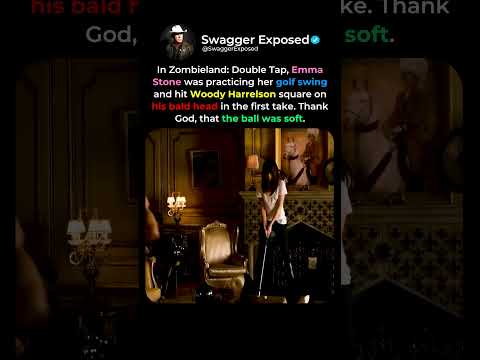
When Emma Stone Hit Woody Harrelson's Bald Head With a Golf Ball 🏌️♀️😂
조회수 104,463

Why Anjelica Huston Never Returned As Morticia Addams 🖤💃
조회수 201,261