[기억의 출발: 흙먼지가 가라앉은 뒤] 광주-라이프치히 기관교류전 전경 영상

지금 보고 있는 영상

[기억의 출발: 흙먼지가 가라앉은 뒤] 광주-라이프치히 기관교류전 전경 영상
조회수 64
영상 설명 · 눌러서 펼치기
광주광역시-독일 라이프치히시 기관교류전 《기억의 출발: 흙먼지가 가라앉은 뒤》의 전시 전경 영상을 전해 드립니다.
전시는 ~7월 15일까지 G.MAP 제4전시실, 미디어파사드월, 제5권역(광주송정역)에서 감상하실 수 있습니다.
참여작가: 이세현, 정다영, 크리스토프 블랑켄부르크, 파울라 아발로스, 슈테판 후르티히
전시기간: 2026.04.16(목) - 2026.07.15(수)
전시장소: G.MAP 제4전시실, 미디어월, 창의벨트제5권역(송정역)
영상제작: 가능한창작관
광주미디어아트플랫폼(G.MAP)은 광주광역시와 독일 라이프치히시와의 기관교류전 《기억의 출발: 흙먼지가 가라앉은 뒤》를 개최한다. 이번 전시는 광주와 라이프치히 두 도시가 겪어온 역사적 변혁의 시간을 현재와 미래의 렌즈로 조망한다. 5·18 민주화운동과 독일 평화혁명이라는 두 도시의 역사적 사건은 오늘날까지도 도시의 기억과 공간에 깊은 흔적으로 남아 있다.
전시명 ‘흙먼지가 가라앉은 뒤(As the dust settles)’는 사회·정치적 사건 이후의 시간과 풍경을 은유적으로 표현하고, 본 전시는 기억과 장소라는 매개를 통해 두 도시에 어떠한 잔흔을 남기고 있는지를 탐색하고자 한다. 또한 ‘기억의 출발’에서 ‘출발(Aufbruch)’은 단순한 이동이 아닌, 새로운 시대의 시작과 전환을 의미하는 독일어로, 변화 이후의 감각과 인식을 내포한다.
이번 전시는 광주와 라이프치히 작가들의 설치, 사진, 퍼포먼스 등 다양한 장르의 작품을 통해, 역사적 변혁 이후 도시가 간직한 기억의 층위와 그 흔적을 다각도로 살펴보고자 한다.
-
Artist: Lee Sehyun, Jung Da-young, Christoph Blankenburg, Paula Ábalos, Stefan Hurtig
Exhibition Period: 2026.04.16(Thu)-2026.07.15(Wed)
Exhibition Venue: G.MAP Gallery 4·Media Façade Wall·Gwangju Songjeong Station Façade
Video Production: STUDIO POSSIBLE ZONE
Gwangju and Leipzig are two cities that became key locations for profound political change in South Korea and the former German Democratic Republic (GDR). Rooted in this shared history of democratic upheaval leading to transformation, the two cities have maintained an official cooperation partnership since 2011. The exhibition brings together artistic perspectives from Leipzig and Gwangju to reflect on the traces of political transformation in the present. Through video, photography, and performance, the works explore how memory, place, and personal narratives shape the relationship between past, present, and future.
Leipzig-based artist Dayong Jung presents the testimony of Korean witness Jungsong Choi, who reflects on the Peaceful Revolution of 1989 while historical footage of Leipzig is shown. This piece links personal memory with collective narratives, exploring how shared histories are formed and which voices remain unheard.
Places act as witnesses, too. Gwangju photographer Lee Se Hyun focuses on ruins and abandoned buildings, briefly bringing their embedded memories back into view.Similarly, Leipzig performance artist Christoph Blankenburg situates himself within landscapes shaped by GDR-era industry and resource extraction. Using humour and absurdity, he questions how and why these environments appear as they do.
Paula Ábalos shifts the perspective to the private sphere. In her video Visitantes, imagined visitors appear in a Leipzig Airbnb apartment furnished in GDR style. Drawing on traces left behind by guests, she speculates about their stories and unseen moments.
Finally, Stefan Hurtig turns towards a possible future. In a visionary pavilion designed by Ulrich Müther on the Baltic Sea, a visitor from the future moves effortlessly through the space while machines perform the labour. This is accompanied by a text inspired by Kazimir Malevich's Laziness as the True Nature of Humanity, which suggests a form of existence that is detached from work.
These artistic positions bring together different times, places and perspectives. They suggest that history is not confined to archives or monuments, but is also present in landscapes, buildings, memories and everyday spaces. As the title of the exhibition, 'As the Dust Settles', suggests, it explores how the past is inscribed into the present and the new meanings that can emerge once the dust of historical events has settled. This makes room for alternative narratives and future possibilities.
전시는 ~7월 15일까지 G.MAP 제4전시실, 미디어파사드월, 제5권역(광주송정역)에서 감상하실 수 있습니다.
참여작가: 이세현, 정다영, 크리스토프 블랑켄부르크, 파울라 아발로스, 슈테판 후르티히
전시기간: 2026.04.16(목) - 2026.07.15(수)
전시장소: G.MAP 제4전시실, 미디어월, 창의벨트제5권역(송정역)
영상제작: 가능한창작관
광주미디어아트플랫폼(G.MAP)은 광주광역시와 독일 라이프치히시와의 기관교류전 《기억의 출발: 흙먼지가 가라앉은 뒤》를 개최한다. 이번 전시는 광주와 라이프치히 두 도시가 겪어온 역사적 변혁의 시간을 현재와 미래의 렌즈로 조망한다. 5·18 민주화운동과 독일 평화혁명이라는 두 도시의 역사적 사건은 오늘날까지도 도시의 기억과 공간에 깊은 흔적으로 남아 있다.
전시명 ‘흙먼지가 가라앉은 뒤(As the dust settles)’는 사회·정치적 사건 이후의 시간과 풍경을 은유적으로 표현하고, 본 전시는 기억과 장소라는 매개를 통해 두 도시에 어떠한 잔흔을 남기고 있는지를 탐색하고자 한다. 또한 ‘기억의 출발’에서 ‘출발(Aufbruch)’은 단순한 이동이 아닌, 새로운 시대의 시작과 전환을 의미하는 독일어로, 변화 이후의 감각과 인식을 내포한다.
이번 전시는 광주와 라이프치히 작가들의 설치, 사진, 퍼포먼스 등 다양한 장르의 작품을 통해, 역사적 변혁 이후 도시가 간직한 기억의 층위와 그 흔적을 다각도로 살펴보고자 한다.
-
Artist: Lee Sehyun, Jung Da-young, Christoph Blankenburg, Paula Ábalos, Stefan Hurtig
Exhibition Period: 2026.04.16(Thu)-2026.07.15(Wed)
Exhibition Venue: G.MAP Gallery 4·Media Façade Wall·Gwangju Songjeong Station Façade
Video Production: STUDIO POSSIBLE ZONE
Gwangju and Leipzig are two cities that became key locations for profound political change in South Korea and the former German Democratic Republic (GDR). Rooted in this shared history of democratic upheaval leading to transformation, the two cities have maintained an official cooperation partnership since 2011. The exhibition brings together artistic perspectives from Leipzig and Gwangju to reflect on the traces of political transformation in the present. Through video, photography, and performance, the works explore how memory, place, and personal narratives shape the relationship between past, present, and future.
Leipzig-based artist Dayong Jung presents the testimony of Korean witness Jungsong Choi, who reflects on the Peaceful Revolution of 1989 while historical footage of Leipzig is shown. This piece links personal memory with collective narratives, exploring how shared histories are formed and which voices remain unheard.
Places act as witnesses, too. Gwangju photographer Lee Se Hyun focuses on ruins and abandoned buildings, briefly bringing their embedded memories back into view.Similarly, Leipzig performance artist Christoph Blankenburg situates himself within landscapes shaped by GDR-era industry and resource extraction. Using humour and absurdity, he questions how and why these environments appear as they do.
Paula Ábalos shifts the perspective to the private sphere. In her video Visitantes, imagined visitors appear in a Leipzig Airbnb apartment furnished in GDR style. Drawing on traces left behind by guests, she speculates about their stories and unseen moments.
Finally, Stefan Hurtig turns towards a possible future. In a visionary pavilion designed by Ulrich Müther on the Baltic Sea, a visitor from the future moves effortlessly through the space while machines perform the labour. This is accompanied by a text inspired by Kazimir Malevich's Laziness as the True Nature of Humanity, which suggests a form of existence that is detached from work.
These artistic positions bring together different times, places and perspectives. They suggest that history is not confined to archives or monuments, but is also present in landscapes, buildings, memories and everyday spaces. As the title of the exhibition, 'As the Dust Settles', suggests, it explores how the past is inscribed into the present and the new meanings that can emerge once the dust of historical events has settled. This makes room for alternative narratives and future possibilities.
광주미디어아트플랫폼(G.MAP) 다른 영상

[완전한 것들의 틈] 5·18 기념 미디어아트 특별전 전경 영상
조회수 90

[완전한 것들의 틈] 5·18 기념 미디어아트 특별전 인터뷰 영상
조회수 144

[완전한 것들의 틈] 5·18 기념 미디어아트 특별전 스팟 영상
조회수 49

[뉴웨이브] 2026 청년융합예술인 선정 작가전 제1회 뉴웨이브 전경 영상
조회수 96

[뉴웨이브] 2026 청년융합예술인 선정 작가전 제1회 뉴웨이브 스팟 영상
조회수 70

[2025 유네스코 미디어아트 창의도시 국제포럼]
조회수 132
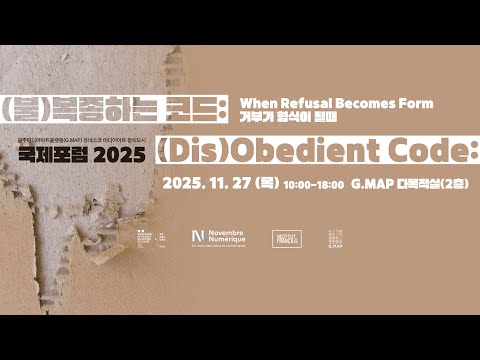
(불)복종하는코드: / (Dis)Obedient Code:
조회수 99

[감각 환경] 2025 G.MAP 특별기획전 인터뷰 영상
조회수 275