NEITHER DONKEY NOR HORSE | Omeleto
지금 보고 있는 영상
NEITHER DONKEY NOR HORSE | Omeleto
조회수 17,505
영상 설명 · 눌러서 펼치기
A doctor struggles.
1910, Manchuria, China. An outbreak of the plague has swept through the region, and people are dying in alarming numbers. Dr. Wu is a young physician, trained in the West and trying to save lives alongside traditional healers, who are suspicious of his training. He's begun to formulate a theory about the disease, believing it is transmitted through particles in the air, but he can't be sure without examining a cadaver. But the master healer, Master Yao, won't let him, seeing the process of cutting a dead body as barbaric.
His attempts to appeal to the higher government authorities, advised by Dr. Mesny, also fall on deaf ears, with Mesny convinced of his own superiority. Facing prejudice from both East and West, Dr. Wu must risk his reputation and face potential reprisal to seek the truth that just may save countless lives, now and in the future.
Directed by Robin Wang and written by Robin Wang and Jesse Aultman, this compelling short historical drama details the heroic struggle of a young doctor grappling with the limiting beliefs around him as he attempts to solve the mystery of a deadly plague sweeping Manchuria in 1910. The phrase "neither donkey nor horse" refers to the blending of Eastern and Western medicines, and as a character, Dr. Wu embodies this idea with his medical training and his Chinese identity. But the process of this blending is not as smooth as implied, as Dr. Wu encounters obstacles ranging from racism to suspicion to the danger of the disease itself.
Based on a true story, its elegant visuals and masterful storytelling transport viewers to a time and a place that receives little attention in popular culture or discourse. But the focus is firmly on character, delving into the motivations, drives and frustrations of the doctor at the narrative's center. The film is on the longer side for a short, but it uses its scope and scale well, laying out the complex context that Dr. Wu operates within: the government bureaucracy as it attempts to coordinate a response, the gruesome swiftness of the disease, the authorities and advisors that don't see Dr. Wu as an equal or are suspicious of his Western training.
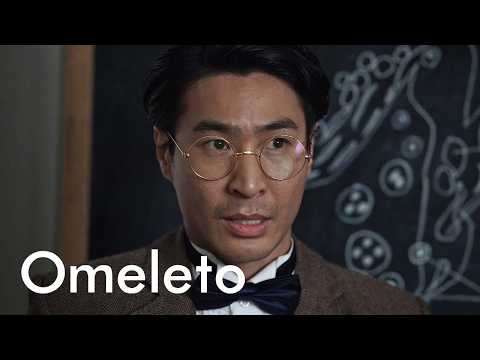
Convinced that this plague is not transmitted by flea bites, he needs evidence that it's transmitted by air, but is unable to get it. And without proof, the government's response will be inadequate to contain it, targeting the wrong means of transmission. As Dr. Wu, actor Chris Pang -- who audiences may know from CRAZY RICH ASIANS -- endows his character with a dignity and courtly reserve that never devolves, though Pang captures a growing frustration under his calm surface. He is determined and takes the steps he needs to discover the truth.
Thoughtful, precise, and even-keeled, the Student Academy Award-winning NEITHER DONKEY NOR HORSE is a quietly heroic story, but its major accomplishment is its ability to draw parallels between our current past and this more distant one, highlighting the importance of coordinated large-scale response and a respect for science in fighting outbreaks of disease. Dr. Lien-teh Wu's recommendations and innovation of the first PPE mask informed public health responses for similar epidemics of communicable diseases well past his time, showing how one idea or innovation can have lasting impact and save lives -- and the difficult journey they have to get through to do so.
NEITHER DONKEY NOR HORSE. Courtesy of Robin Wang at https://instagram.com/neitherdonkeynorhorse_film.