How the Hangover's Dumbest Line Became the Funniest 🎬😂

지금 보고 있는 영상
How the Hangover's Dumbest Line Became the Funniest 🎬😂
조회수 2,773
영상 설명 · 눌러서 펼치기
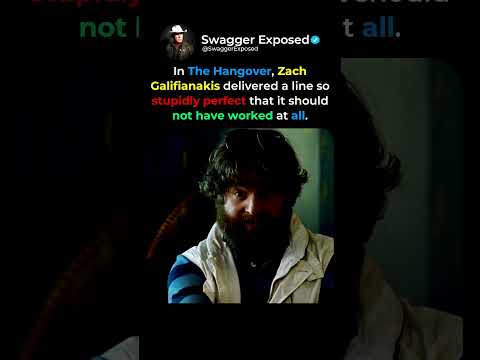
The Hangover arrived in 2009 as a raucous comedy built on chaos, missing grooms, and the collective stupidity of men who should have known better, yet it was Zach Galifianakis who elevated the film beyond its raunchy premise through a single, inexplicable moment of comedic genius. His delivery of the line "But did you die?" — lobbed at a frantic Ed Helms with the serene confidence of a man utterly unbothered by consequence — functioned on paper as nothing more than a non sequitur, a deflection so blunt it bordered on nonsensical. By every conventional measure of comedic craft, it possessed no setup, no escalating tension, and no logical punchline structure, the very scaffolding that comedy writers had relied upon for decades. Yet Galifianakis threaded something ineffable through the moment — a deadpan vacancy so complete, so weaponized, that audiences found themselves laughing not at the joke but at the audacity of its existence. The line escaped the film entirely, migrating into everyday speech as a cultural shorthand for dismissive absurdism, proof that the highest form of comedy sometimes operates entirely outside the rules that govern it. In refusing to make sense, it made perfect sense, and that paradox became the defining legacy of one of the most quotable comedic performances of its era.
This video is intended solely for educational and historical analysis. It does not support, promote, or glorify war or any form of hatred. Its purpose is to present verified historical facts and encourage critical understanding of past events.
This video is intended solely for educational and historical analysis. It does not support, promote, or glorify war or any form of hatred. Its purpose is to present verified historical facts and encourage critical understanding of past events.
Swagger Exposed Shorts 다른 영상

How Cher's Improvised Slap Made it Into Mermaids 🎬👋
조회수 801

When Judomaster Hit the Ground Still Cuffed 😂⚡
조회수 23,652

Back When Supernatural's 2009 Transitions Went Viral 😂📺
조회수 2,904

When a Supernatural Blooper Made It Into the Final Cut 🎬😮
조회수 37,876

The Lost World Game Had the Best Secret Ending 🦕🎮
조회수 5,564

How Tom Hardy Ate Chocolate Chips Through a Brutal Interview 🍫😂
조회수 28,743

How Tom Hanks Played Five Characters at Once 🎄🎭
조회수 3,499

How Karl Urban Fixed Billy Butcher's Accent 🎭🇳🇿
조회수 7,718